

We support you in two main areas:

Compliance & Validation

„Common sense is the talent to see things as they are and to do things the way they should be done.“ Calvin Ellis Stowe

Above all, compliance needs to be addressed with common sense and a sense of balance – as well as specialist expertise and knowledge about standards and regulations. Staying true to this mantra/value, we support you in:

  • computerised system validation according to GAMP
  • developing a validation strategy
  • creation of validation documentation
  • review of validation documentation, e.g. in the role of a project quality manager
  • GxP compliant process design and implementation
  • supplier assessments
  • internal compliance checks
  • awareness activities and training (CSV, GxP, Records Management, Good Documentation and Good Testing Practice)

Contact us!

Our principles
We are honest and transparent partners to our customers, who have told us that our reliable and verifiable results have let to mutual trust.

We value and keep a constructive dialogue with your and your team, which leads to pragmatic and appropriate solutions. These, in turn, are the solutions that you and your teams will implement and embed, so that desired benefits can be realised. That your organisation is not only legally compliant but ultimately benefits from the compliance and validation solution is paramount to us.

We support you in realising these benefits by providing training, coaching or expert consultancy. We deliver bespoke solutions instead of ready-made concepts.

Gabriele Vollmar

Knowledge Management

„In a knowledge society everyone is a volunteer.“ Peter Drucker

Welcome to the Knowledge Garden. Our definition of knowledge management: Knowledge management shapes a beneficial environment for productive knowledge work. With our full commitment and a good dose of pragmatism we support you in:

  • developing and implementing a knowledge management strategy
  • assessing the as-is state of KM (KM audit)
  • implementing KM according to ISO 9001 and ISO 30401
  • implementing KM tools
  • Intellectual Capital Reporting
  • Expert Debriefing
  • identifying and transferring Lessons Learned
  • creating awareness by employees and executives
  • trainings and workshops on KM for novices and advanced
  • review of your existing KM strategy
  • establishing KM controlling for impact assessment

Contact us!

Our principles
We aim at a transparent and honest partner-like relationship with our customers. Mutual trust is based on reliable and verifiable results on our part. There are no panaceas for your knowledge management or your processes. This is why we value a constructive dialogue with you and your employees. It is only from dialogue that emerge pragmatic and appropriate solutions, which are accepted by people and can unfold their full potential.

Your clear benefit is paramount to us. Thus, our concepts can actually be realized and we support you in their realization as trainer, coach or expert consultant.

Custom-fit solutions instead of ready-made concepts.

Gabriele Vollmar

Knowledge Garden

„Where Knowledge grows together.“

Imagine a place where knowledge is not confined to rigid archives but is alive and constantly evolving. With the ‚Knowledge Enabling Framework‘, also known as the ‚Knowledge Garden‘, I aimed to demonstrate precisely that. I developed this concept to show that knowledge management is not about knowledge itself as an abstract entity. It’s about how we deal with it. In other words, it is about knowledge work. In this model, knowledge work is not a linear process with clearly defined phases or steps. Rather, it is a fluid interplay of conscious and unconscious knowledge-related activities. For example, knowledge is applied within a process, i.e. it is put into practice. With each application — initially individual — experiential knowledge expands, and we learn more, resulting in the emergence of new knowledge. This new knowledge can be transferred in the sense of productive, and therefore non-solipsistic, knowledge work, either directly through interpersonal exchange or indirectly via codification and documentation. This can then be applied on a broader basis.

  • Why a garden?

    The image of a garden represents an organic approach to organisation that differs from the mechanistic principles of Taylorism. Organic organisations are intelligent. They recognise changes in their environment and deduce the necessary adjustments to the system. The garden therefore represents the learning organisation and the Knowledge Enabling Framework. It serves as an analogy for the organic and the living — in other words, the guiding principle of a learning organisation. It also encapsulates the core principle of the Knowledge Enabling Framework. A gardener can only indirectly influence the growth process of their plants by creating the right conditions; they cannot control or predict it directly. The same applies to knowledge work. Translating abstract ideas into a sensory context frees the imagination and encourages associations (e.g. why is there no fence, and what are the ’snails‘?). Unlike abstract diagrams, this image allows for deeper engagement and quick, intuitive understanding of complex issues. The image has been deliberately designed without detail (‚low perceived finishedness‘) to allow scope for the organisation’s specific interpretation. Interpretation is left to the viewer, or to a joint process of negotiation. The image is not intended to amaze; rather, it is an invitation to develop the idea further. Ultimately, the aim is to inspire a desire to engage with knowledge management and the learning organisation through emotional appeal and aesthetics.

  • Organisation and Processes

    Knowledge is generally applied within processes. Therefore, organisational processes must be designed with a focus on knowledge to ensure that it is available where needed and can be utilised as efficiently as possible. Integrating knowledge management tools that support the effective application of knowledge within processes is part of such a design, in order to minimise additional effort. This also involves establishing process-specific knowledge management procedures, such as systematic and targeted processes for knowledge transfer during expert debriefings or lessons learnt sessions. Ultimately, the organisation, along with its structures and communication channels, must be knowledge-oriented. This can be achieved through communities of practice and similar organisational forms, which establish an additional knowledge-based layer within the organisation. Furthermore, the organisation of knowledge management itself must be considered, including its position within the organisational structure and the relevant roles.

  • Strategy:

    To ensure that knowledge management provides sustainable support to the organisation in achieving its objectives, that the organisation and its processes are designed in a targeted manner and that a fundamental answer can be found to the question of what knowledge is necessary and relevant for the organisation (both now and in the future), knowledge management must be integrated strategically and understood as a strategic issue in its own right for achieving the organisation’s objectives. Without clear objectives and specific expected benefits, performance monitoring and genuine long-term control are impossible.

  • People and Culture:

    Knowledge workers are at the centre because they possess knowledge, put it into practice and generate new knowledge through innovation. Consequently, a supportive framework is needed to help people manage knowledge effectively. This encompasses a user-centred approach to process design, as well as issues relating to the sustainable motivation and leadership of knowledge workers. People shape culture – Bright and Parkin refer to this as ‚that’s how we do things here‘. According to Schein, organisational culture consists of three layers:

    1.Surface: Visible behaviours, artefacts and products, such as visual appearance, workstations, rituals and myths.

    2.Middle: Collective values that determine employee behaviour.

    3.Depth: The unconscious basic assumptions about how to respond to the environment that are so deeply ingrained that they are neither questioned nor recognised.

    Organisational culture is primarily shaped by deeply held assumptions stemming from shared experiences. It changes slowly. Consistently positive experiences of knowledge sharing generate values such as trust, which are reflected in behaviour. A mere guiding principle is insufficient. Managers play a key role here, as their actions influence patterns. They must therefore recognise their responsibility in knowledge management and understand that fostering an environment conducive to knowledge sharing is an integral part of their role. The cultural aspect is crucial for knowledge management because it relies on voluntary participation. Knowledge work cannot be forced or sanctioned without effective controls, since it takes place in the mind. Above all, a culture that fosters knowledge is a culture of empowerment. It opens up meaningful perspectives and spaces for possibility, and is built on the trust of its members. This reflects a shift in leadership understanding: moving away from ‚Plan – Delegate – Check – Reward/Penalise‘ and towards ‚Enable – Support – Assess – Value‘.

  • Infrastructure

    Finally, knowledge management also requires infrastructure in the form of a practical set of basic resources. This includes IT tools and physical infrastructure such as workstations, meeting rooms and kitchenettes. We can and should also shape knowledge management here.

  • Possible Applications

    The Knowledge Enabling Framework, on which the Knowledge Garden is based, supports strategy development by raising awareness of areas for action across its various dimensions. Possible questions include: •Is knowledge management strategically aligned and integrated within our organisation?

    •How can we encourage acceptance and motivation among our staff?

    •Is our culture conducive to knowledge, and have we set ourselves targets to change it?

    •Are our managers willing to get involved?

    •Do we provide sufficient support for our processes?

    •Have we established a robust knowledge management organisation?

    •Have we implemented the right tools? Are these tools being used?

    The Knowledge Garden promotes a shared understanding of knowledge management as the conscious shaping of framework conditions, thereby supporting its implementation. During workshops with staff and managers, discussion is stimulated and awareness of KM is raised, helping participants to understand their own roles.

Contact us!

Our principles
We aim at a transparent and honest partner-like relationship with our customers. Mutual trust is based on reliable and verifiable results on our part. There are no panaceas for your knowledge management or your processes. This is why we value a constructive dialogue with you and your employees. It is only from dialogue that emerge pragmatic and appropriate solutions, which are accepted by people and can unfold their full potential.

Your clear benefit is paramount to us. Thus, our concepts can actually be realized and we support you in their realization as trainer, coach or expert consultant.

Custom-fit solutions instead of ready-made concepts.

Gabriele Vollmar


The only man who behaves sensibly is my tailor; he takes my measurements anew every time he sees me, while all the rest go on with their old measurements and expect me to fit them.

George Bernard Shaw

Our aspiration: custom-fit solutions instead of ready-made concepts.

Since 1996 I have grown my practical expertise on how to best support the development and establishment of sustainably successful knowledge management systems in various organisations – from big corporate groups to small and medium enterprises, in the private and in the public sector, at home and abroad. Through many different consulting projects I have developed clear concepts for the intelligent management of knowledge and information in organisations.

Moreover, I worked in numerous projects for pharmaceutical companies in the domain of computerised system validation as well as design and implementation of GxP compliant processes in IT, including training and change management. On the basis of my extensive pharmaceutical experience, I follow a risk-based approach, to do the necessary in the right way and with a reasonable portion of common sense.

On request, I will send you an up-to-date list of track records and project references. Please contact me.

Many of these hands-on experiences have found their way into my book “Knowledge Gardening” [Link zur Buchseite] and I am writing about them in specialist articles, lectures and talks, and not least, I have turned them into various video clips provided on my YouTube channel.

I am a member of the advisory board of the German Society of Knowledge Management (Gesellschaft für Wissensmanagement e.V.) and a lecturer at Baden-Wuerttemberg Cooperative State University, University Duisburg-Essen, Technical University Kaiserslautern, Bauhaus University Weimar, and Danube University Krems.
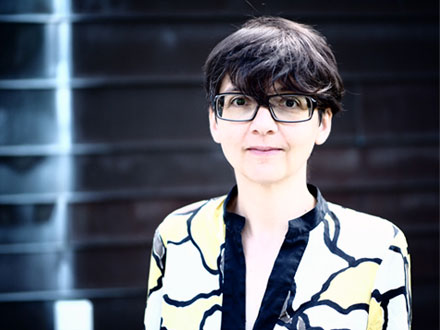
profil-gross
Gabriele Vollmar M.A.
Beraterin &Trainerin

In the spirit of crowd intelligence and agile management, I collaborate with competent and reliable partners. For my customers this flexible network organization offers the advantage of customised competences in a variable team – able to meet individual and concrete project need. Compared to traditional organizational structures, we do this with minimal effort and minimal administrative overhead.