If you follow current debates, you might think that everyone should be afraid of AI.
Or no one. Or only “the others.”
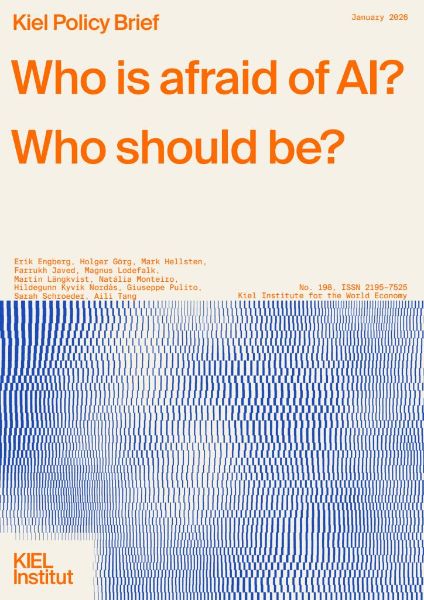
A recent policy brief by the Kiel Institute for the World Economy takes a more differentiated – and refreshingly evidence-based – view.
Here some insights from a knowledge management perspective:
- Exposure is not the same as replacement:
One of the most important clarifications in the study is also one that is often missing in discussions: “Exposure to AI … indicates the potential applicability of AI to an occupation’s tasks — it is not inherently a measure of substitution or complementarity.”
In other words:
Just because AI can do parts of your work does not mean it will replace you.
For knowledge work, this is a crucial distinction. Even in organisations where AI is already deeply embedded it does not necessarily reduce headcount. Instead, we see shifts in how work is done and what kind of knowledge becomes critical. - Surprise(?): High-skilled knowledge workers are most exposed
The study shows a pattern that is different from previous economic transformations: Highly cognitive, non-physical, low-social-interaction jobs (e.g. analysts, developers, translators) are most exposed to AI. Whereas, jobs requiring manual skills or intensive interpersonal interaction are least exposed.
It is not the “low-skilled” jobs that are immediately most affected – it is classic knowledge work.
From a KM perspective, these are precisely the domains where structured knowledge, explicit processes, and codified expertise already exist – making them easier for AI to engage with. Or following Willkes definition of knowledge work it is the knowledge-intense work (not the actual knowledge work). - No (immediate) job loss – but skill shifts
The empirical results across Denmark, Portugal, and Sweden are remarkably consistent:
– No significant negative effect on total employment
– Clear shift towards higher-skilled work (“skill upgrading”)
Firms exposed to AI “raise their high-to-low skill employment ratios” and reallocate toward high-skill white-collar jobs.
This fits closely with what many of us observe in practice:
Routine documentation is automated, analytical work is accelerated. But interpretation, integration, and contextualisation become more important.
Or, in KM terms: We are moving from information processing to meaning-making (from explicit to tacit). - The overlooked dimension: social and tacit knowledge
A particularly interesting methodological choice in the study is the inclusion of social skills as a counterweight to AI exposure:
Social tasks are assumed to be more difficult to automate. This aligns strongly with long-standing KM insights:
Tacit knowledge is hard to codify.
Social interaction is key to knowledge creation (think SECI…).
Context and trust cannot easily be replicated by systems.
If you connect this to earlier discussions on this blog (e.g. on knowledge transfer during offboarding or peer-based formats like Peer Assist), a clear conclusion emerges:
What protects jobs is not the absence of AI—but the presence of social, contextual, and experiential knowledge work. - Not all AI is the same – and that matters
Another important nuance in the study: Different AI subdomains have different effects. In particular: Language modelling, speech recognition, reading comprehension show positive associations with employment across all skill groups.
This is highly relevant for organisations currently introducing generative AI: These systems are not only automation tools – they are collaboration technologies. They amplify communication, documentation, and coordination – core KM processes, if used correctyl and not as a Google 2.0.
What does this mean for knowledge management?
If we step back, the findings point to a shift in the KM agenda.
From:
- Capturing knowledge
- Structuring information
- Reducing redundancy
To:
- Enabling skill development
- Supporting AI-augmented workflows
- Strengthening social knowledge processes
Or more provocatively:
The real risk is not that AI replaces knowledge workers.
The real risk is that organisations fail to redefine knowledge work.
So, who should be afraid?
The answer from the study is clear: It depends on the tasks you perform.
Be concerned if your work is:
- Highly standardised
- Easily codified
- Low in social interaction
Be optimistic if your work involves:
- Interpretation and judgment
- Cross-context integration
- Collaboration and sensemaking
However, AI does not primarily eliminate work. It reshapes the skill profile of work. Which is not a surprise, is it?
But what are the implications for knowledge management?
- We need better ways to develop and transfer higher-order skills.
- We need to redesign knowledge processes for human–AI collaboration.
- And we need to take tacit and social knowledge more seriously than ever.
Because in the end, the question is: Who is prepared to work differently with knowledge?
And another question that arises from this is: What does this mean for young people entering the workforce?
To be continued.